
Eunice Newton Foote: The Woman Who Saw the Future of Climate Science
published on August 11, 2026
Meet Eunice Newton Foote—an inventor, scientist, women’s rights advocate, and one of the first people to recognize that carbon dioxide can warm our planet. Although her groundbreaking work was overlooked for more than a century, today she is finally receiving the recognition she always deserved.
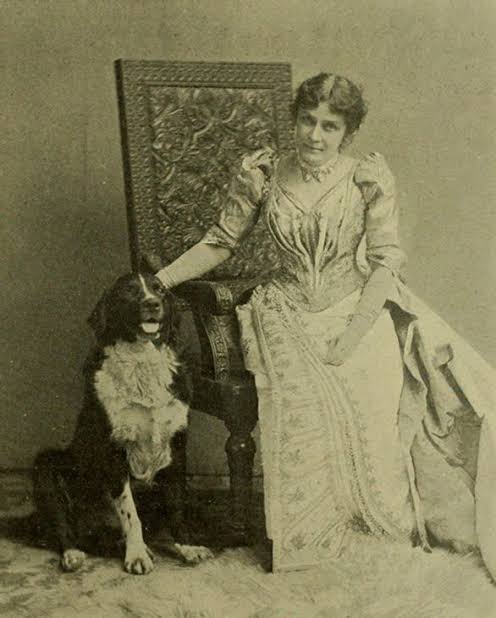
Eunice Newton Foote was born on July 17, 1819, in Goshen, Connecticut, and grew up in New York during a time of great social change. She attended the Troy Female Seminary, one of the few schools in America in the 1800s that offered young women an advanced education in science.
She Discovered the Greenhouse Effect in the 1850’s
In 1856, Foote performed a series of simple, but ingenious, experiments using glass cylinders, air, sunlight, and various gases. She discovered that carbon dioxide became much hotter than ordinary air when exposed to sunlight.
From this observation, she made an extraordinary prediction: if there were more carbon dioxide in Earth’s atmosphere, the planet’s temperature could increase.
Today, we know this phenomenon as the greenhouse effect, one of the fundamental principles behind modern climate science. Foote reached this conclusion years before other scientists published similar findings.
An Advocate for Women’s Rights
Living in Seneca Falls, NY, she became an active supporter of women’s rights and attended the historic Seneca Falls Convention in 1848, the first major women’s rights convention in the United States. She signed the Declaration of Sentiments, a document that called for equal rights for women, including the right to vote.
She was also an inventor, earning patents for improvements to paper-making equipment and other practical inventions. Her life shows that creativity can take many forms.
Why Was She Forgotten?
Despite the importance of her research, Foote’s work received little attention during her lifetime.
In the mid-1800s, women were often excluded from scientific societies and were not always allowed to present their own research. In fact, her scientific paper was presented by a male scientist because women could not speak at that meeting. Over time, her discovery faded from public memory while later scientists received most of the credit.
Fortunately, historians and climate scientists have worked hard to restore Eunice Newton Foote to her rightful place in scientific history.
A Legacy That Continues to Grow
Today, Eunice Newton Foote is celebrated as a pioneer of climate science. Her work is taught in classrooms, discussed by historians of science, and recognized by scientific organizations around the world. Her story reminds us that brilliant ideas can come from anyone and that history sometimes needs correcting.
Her story is also reaching a new generation of readers through children’s literature. In 2026, several books introduced young audiences to her remarkable life and discoveries. Foote Was First celebrates Foote as the first scientist to identify carbon dioxide’s role in warming Earth’s atmosphere, presenting her story in an engaging way for elementary readers. Change Is in the Air: The Hidden Discoveries of Eunice Newton Foote, the First Climate Scientist by Rebecca Donnelly and illustrated by Mercè López explores her groundbreaking experiment through vibrant artwork and accessible storytelling. For older readers, Footeprint: Eunice Newton Foote at the Dawn of Climate Science and Women’s Rights by Lindsay H. Metcalf weaves together Eunice’s scientific achievements with her advocacy for women’s rights. The last two books are available at the Eva K. Bowlby Public Library in Waynesburg.
Her Story on the Stage
Foote is also a main character in the play The Beautiful Future is Coming, by Flora Wilson Brown.