
Ethnic Holiday Feasts brought to Southwest Pennsylvania
published on December 2, 2025


Southwestern Pennsylvania has always been a crossroads of cultures. Nowhere is this more evident than in the holiday season, when old-world customs light up homes, churches, and community halls across Washington and Fayette counties. From Italian Christmas Eve feasts to Orthodox Holy Suppers and Hanukkah celebrations, the region’s holiday season reflects the diversity of its immigrant roots even if they are not as prevalent today. Here are just a few dinners celebrated in local newspapers from late 1800’s to the 1950’s.
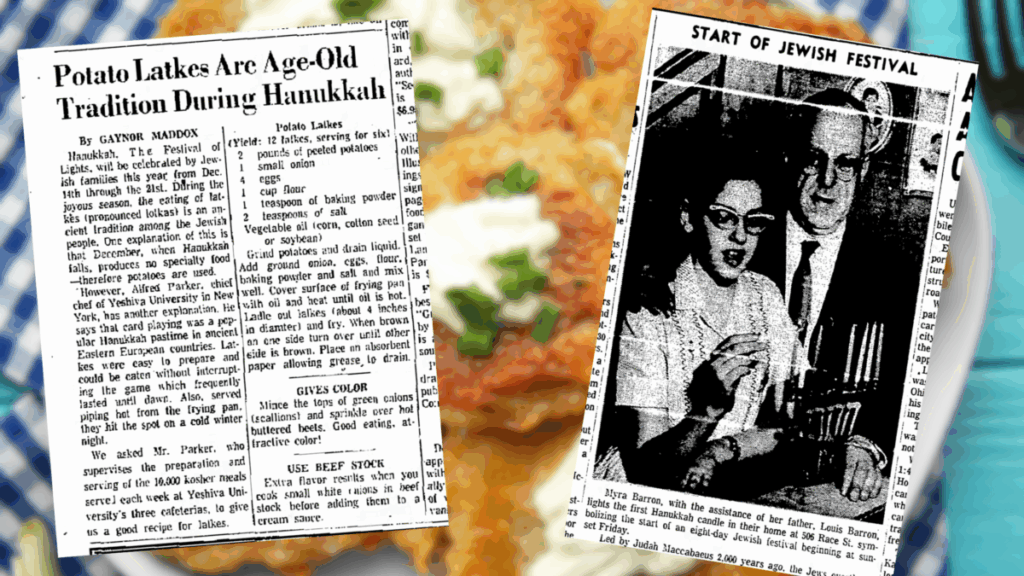
Jewish Communities and Hanukkah Latkes
In Connellsville, PA Jewish families gathered at the B’nai Brith Synagogue at 412 North Pittsburgh Street for Hanukkah programs celebrating light and resilience. The once church was converted for synagogue use in 1910. Starting in 1911 the town of Donora, PA also had The Onav Sholom Synagogue at 2nd St. and Thompson Ave. As reported in The Daily Courier (Dec. 24, 1932), their festivities marked both faith and community spirit.
By mid-century, The Evening Standard in Uniontown featured recipes for potato latkes, a time-honored dish fried in oil to commemorate the miracle of the Maccabees. See the full recipe below.
While most synagogues in the region have closed, some buildings remain. By the late 20th century, the B’nai Brith Synagogue building reverted back to church use and the Onav Sholom Synagogue currently houses the Mon Valley Youth & Teen Association, Inc.
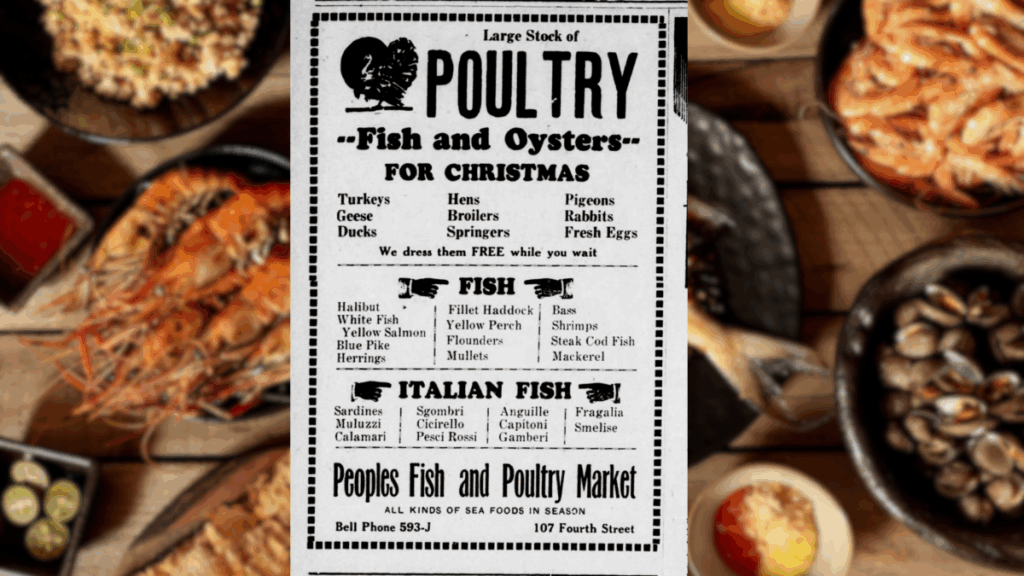
Italian-American Christmas Eve Fishes
In the region’s mill towns, coal patches, and larger cities, Roman Catholic Italian families preserved the Feast of the Seven Fishes. The Daily Notes (Canonsburg, Dec. 23, 1931) described families gathering around elaborate Christmas Eve tables filled with fish before attending midnight Mass. After returning home, punch and cake were served before a late morning of rest. For many families, the rhythm of worship, food, and fellowship mirrored the holiday cycles their ancestors observed in southern Italy.
Numerous Roman Catholic churches survive throughout Southwest PA. In the heyday of immigration into the region, many churches were established for the new arrivals with masses typical given in native languages.
St. Therese Church on Mill St. in Uniontown was established in the 1930s for the growing Italian population. In fact, a new church was constructed in the 1960s to accommodate more parishioners and remains active.
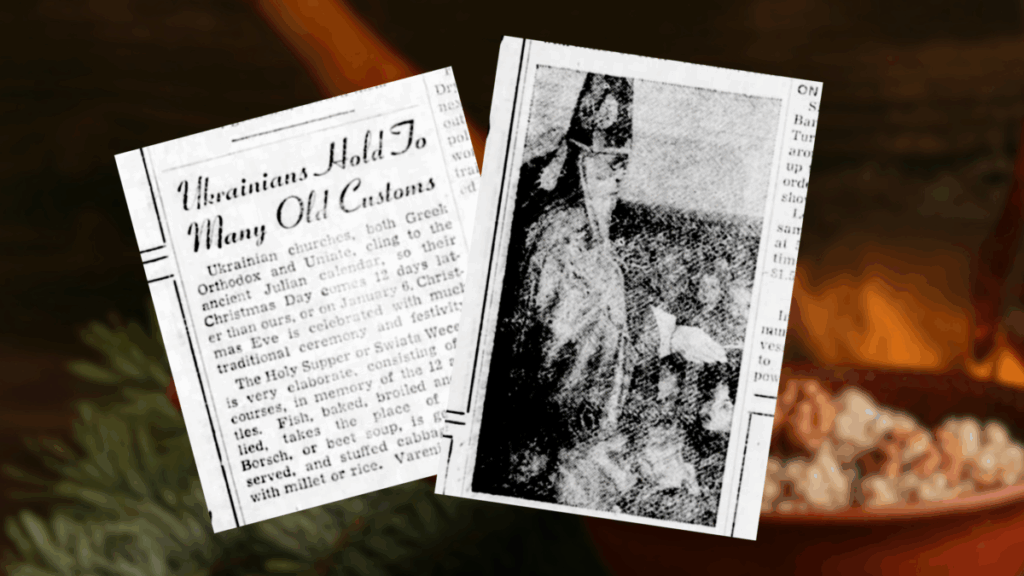
Ukrainian Orthodox Holy Supper
Orthodox communities across Fayette and Washington counties follow the Julian Calendar, celebrating Christmas on January 7. The Daily Herald (Jan. 4, 1946) noted that Orthodox Christians observe the day with a Holy Supper of twelve meatless dishes, which symbolize the twelve Apostles, featuring borsch, cabbage rolls, fish, and kutya, a sweet grain pudding.
In Ukrainian households, throwing a spoonful of kutya at the ceiling was a way to divine the year’s fortune: if it stuck, happiness would follow, but maybe not for those who were on clean-up duty!
The region’s Orthodox culture continues in several active parishes, including
- Holy Trinity Orthodox Church in New Salem
- Holy Trinity Church in Charleroi
- St. Nicholas Orthodox Church in Donora
- Nativity of the Virgin Mary Church in Monongahela
- Holy Resurrection Church in West Brownsville
- Holy Resurrection Orthodox Church in Belle Vernon
- St. John the Baptist Orthodox Church in Canonsburg
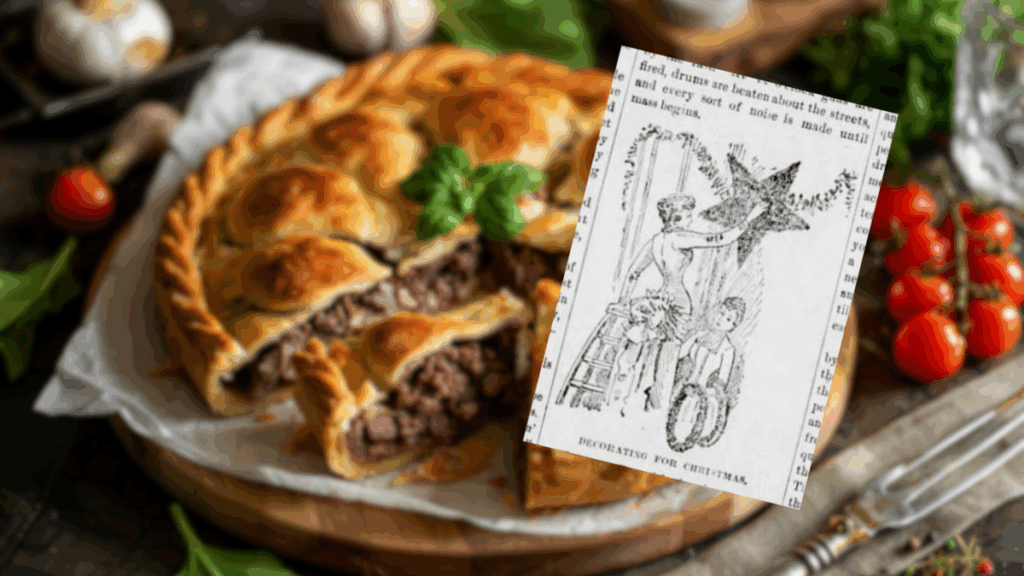
Old-World European Pies & Puddings
Even before the great immigrant waves of the early 1900s, local newspapers like The Daily Herald (Dec. 21, 1881) chronicled European folk customs that influenced regional celebrations. From German Christmas trees and Yule logs to the Bohemian ritual of shaking fruit trees for good harvests, these traditions emphasized nature’s renewal and divine generosity.
The Monongahela Valley Republican (Dec. 25, 1873) noted churches decorated altars with ivy and holly, and English-style Christmas dinners featured plum pudding and Yorkshire pie, carrying the festive spirit across oceans and generations.
Threads of Light and Memory
Across a century of clippings, recipes, and remembrances, the story of Washington and Fayette counties during yearend festivities is one of continuity and adaptation. Jewish, Italian, Slavic, and Anglo traditions intertwined here, each adding flavor to the regional mosaic. Whether lighting a menorah in Uniontown, launching kutya in Monongahela, or frying eel in Canonsburg, families kept the lights of their ancestors burning bright, illuminating the Pennsylvania winter with faith, food, and family.
What traditions do your family follow? Are any tied to specific ethnic histories?
Potato Latke Recipe
Yield: 12 Latkes, serves 6
Ingredients:
2 pounds of Russet potatoes, peeled
1 small onion
4 eggs
1 cup flour
1 teaspoon baking powder
2 teaspoons salt
Vegetable oil for frying
Instructions:
- Grate peeled potatoes and onion using a box grater. Place grated potatoes and onion in a colander and press to remove excess liquid.
- Add drained potatoes and onion to a large mixing bowl. Add the remaining ingredients and mix well.
- Cover surface of frying pan with oil and heat until hot. Add latke batter (about 4 inches in diameter) and fry. When golden brown, flip latkes over to brown on the other side.
- Place finished latkes on a paper towel lined surface to absorb excess oil. Fry remaining latkes. Serve warm.